
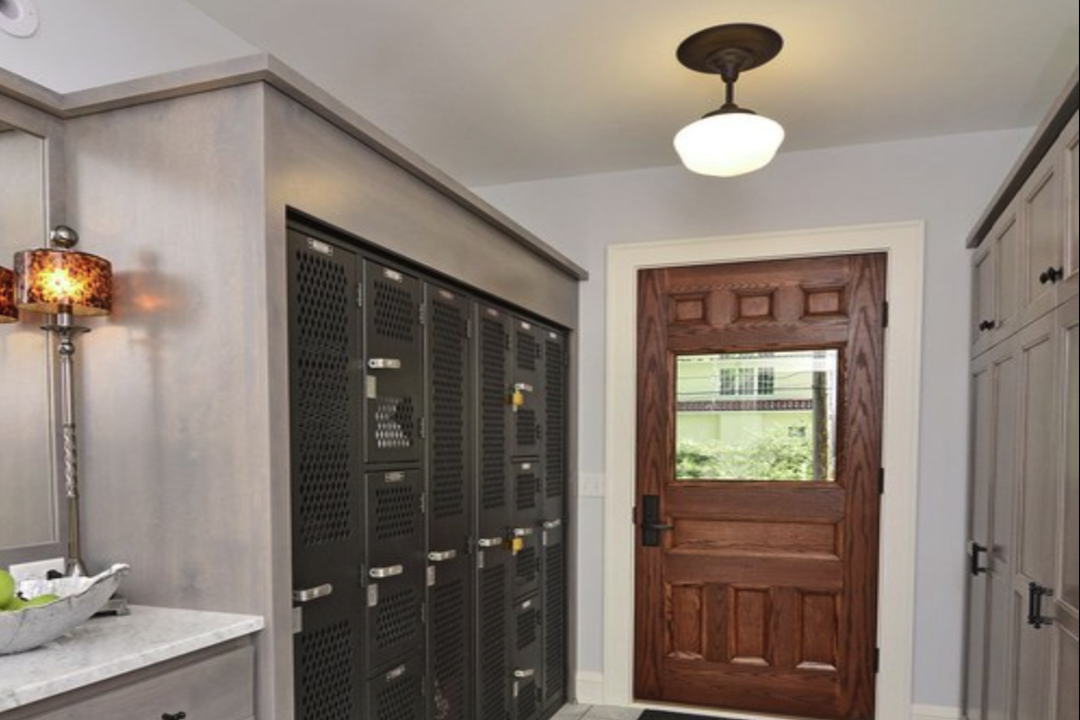
The mudroom, often positioned as a transitional space between the outdoors and the interior of a home, serves a crucial role in maintaining cleanliness and organization. Its functionality, however, does not preclude the incorporation of thoughtful design elements. Among these, lighting stands out as both a practical necessity and a significant contributor to the aesthetic character of the space. This article explores the principles and applications of modern ceiling lighting in mudrooms, focusing on fixtures that blend contemporary design with functional integrity and individual appeal.
A mudroom’s primary function dictates specific lighting requirements. Unlike a living room where ambient light Lookinhome might be prioritized for mood, or a kitchen where task lighting is paramount, a mudroom demands a balanced approach. It needs sufficient illumination for practical tasks yet also contributes to the overall home aesthetic.
Task-Oriented Illumination
Activities within a mudroom frequently involve fine motor skills and attention to detail. These can range from sorting mail, removing muddy footwear, organizing sporting equipment, or even grooming pets. Adequate task lighting ensures these activities can be performed safely and efficiently. A dimly lit mudroom can lead to missteps, forgotten items, or inefficient organization.
Ambient Light for Overall Visibility
Beyond specific tasks, general ambient light provides overall visibility within the mudroom. This is crucial for navigating the space, locating items, and ensuring a welcoming atmosphere. The absence of sufficient ambient light can make a mudroom feel cramped, unwelcoming, and even somewhat claustrophobic. It should act as a seamless extension of the home, not a gloomy afterthought.
Accent Lighting for Aesthetic Appeal
While function is paramount, accent lighting can elevate the mudroom from a purely utilitarian space to one with intentional design. This may involve highlighting a built-in bench, a specific piece of artwork, or key organizational features. Accent lighting, when applied judiciously, can transform a mundane area into a design statement, reflecting the home’s overall stylistic choices.
Understanding Modern Ceiling Light Design Principles
Modern ceiling lighting for mudrooms often adheres to principles of minimalism, clean lines, and innovative materials. These principles prioritize functionality without sacrificing aesthetic appeal, offering a stark contrast to more ornate historical styles.
Minimalism and Clean Lines
The hallmark of modern design is often its simplicity. In ceiling lights, this translates to fixtures with uncluttered profiles, geometric shapes, and a lack of superfluous ornamentation. These designs integrate seamlessly into contemporary interiors, avoiding visual noise and allowing other design elements to take prominence. The absence of heavy embellishments also simplifies maintenance, a practical consideration for high-traffic areas like mudrooms.
Material Innovation
Modern lighting designers frequently incorporate materials such as brushed metals (e.g., stainless steel, aluminum), frosted or clear glass, acrylics, and occasionally natural wood elements. The choice of material often influences the light’s diffusion, durability, and perceived visual weight. For instance, a metal fixture might provide a more directional light, while a frosted glass diffuser disperses light more broadly, creating a softer ambiance.
Geometric Forms and Abstract Shapes
Modern ceiling lights often utilize geometric forms – squares, circles, rectangles, and cylinders – both individually and in combination. Abstract shapes can also be employed, particularly in more artistic or avant-garde designs. These forms contribute to the graphic quality of modern aesthetics and can range from subtle to overtly sculptural, acting as focal points within the mudroom’s design.
Selecting the Right Modern Ceiling Light Fixture
The selection process for a modern mudroom ceiling light involves considerations beyond mere aesthetics. Practical factors such as ceiling height, room size, and existing décor play a significant role in determining the most suitable fixture.
Flush Mount and Semi-Flush Mount Fixtures
For mudrooms with lower ceiling heights, flush mount fixtures are a common and effective choice. These lights attach directly to the ceiling, protruding minimally, thus maximizing headroom. Semi-flush mount fixtures offer a slight drop from the ceiling, providing a more diffused light distribution and a subtle decorative element. Both options maintain a streamlined profile, aligning with modern design sensibilities.
- Advantages of Flush Mounts: Low profile, excellent for small spaces, unobtrusive.
- Advantages of Semi-Flush Mounts: Softer light diffusion, slightly more decorative than flush mounts, suitable for slightly higher ceilings.
Pendant Lights and Chandeliers
In mudrooms with higher ceilings or those designed with a more expansive feel, pendant lights or even small chandeliers can serve as striking focal points. Pendant lights, suspended from the ceiling by a rod or chain, can provide task lighting over a specific area, such as a bench or sorting surface. A well-chosen modern chandelier, in a simplified form, can elevate the mudroom from a purely practical space to a curated design statement.
- Considerations for Pendants: Height adjustment, scale relative to the room, light direction.
- Considerations for Chandeliers: Visual weight, overall design coherence with surrounding elements.
Recessed Lighting and Track Lighting
Recessed lighting, integrated directly into the ceiling, offers a clean, unobtrusive look. It provides general ambient light without any visible fixture, creating a minimalist aesthetic. For areas requiring adjustable illumination, such as highlighting specific storage units or artwork, track lighting systems offer flexibility. Modern track lights often feature sleek, discreet designs that blend into the ceiling, avoiding the bulkier appearance of older iterations.
- Recessed Lighting Strengths: Minimalist appearance, even light distribution, unobtrusive.
- Track Lighting Strengths: Versatile, adjustable, ideal for accentuating specific features.
Character and Personality in Lighting Choices
While functionality and modern aesthetics provide the framework, the “character” in a mudroom’s ceiling light comes from its ability to express the homeowner’s individual style and contribute to the unique ambiance of the space. This is where the mudroom light transforms from a mere utility to a statement piece.
Incorporating Industrial Chic
The industrial chic aesthetic, characterized by exposed elements, raw materials, and utilitarian design, can be effectively translated into mudroom lighting. Think about fixtures crafted from blackened steel, brushed copper, or with visible Edison bulbs. These lights speak to a sense of authenticity and rugged functionality, echoing the mudroom’s practical purpose while offering a sophisticated edge. This style often pairs well with exposed brickwork, concrete floors, or deep, earthy tones.
Embracing Scandinavian Simplicity
Scandinavian design principles, prioritizing functionality, light, and natural materials, offer another path to injecting character. A modern ceiling light in this style might feature a pale wood base, a matte white or grey shade, and a clean, almost organic shape. Such fixtures bring a sense of calm and clarity to the mudroom, aligning with an aesthetic that values understated elegance and comfort. They often work well with light-colored walls, natural textiles, and minimalist decor.
Art Deco and Geometric Flair
For those inclined towards a more flamboyant yet still modern aesthetic, elements of Art Deco or contemporary geometric designs can provide striking character. This might involve fixtures with brass accents, fluted glass, or bold, symmetrical patterns. These lights introduce a sense of glamour and intentional design, transforming the mudroom into a transitional area with a noticeable stylistic impact. Such choices demand that the rest of the mudroom’s design elements reciprocate this level of visual engagement.
Customization and Bespoke Elements
For a truly unique reflection of personality, consider customized or bespoke lighting solutions. This could involve working with a lighting designer to create a one-of-a-kind fixture, or adapting an existing design with personalized finishes or bulb types. A custom piece becomes more than just a light source; it becomes an art installation that tells a story, making the mudroom an expression of individual creativity, rather than just a functional stop on the path into the home.
Considerations for Optimal Lighting Performance
Beyond the aesthetic and functional aspects of the fixture itself, various technical considerations impact the overall performance and energy efficiency of mudroom lighting. Ignoring these can lead to inadequate illumination or unnecessary energy consumption.
Light Temperature (Color Temperature)
Light temperature, measured in Kelvin (K), significantly impacts the mood and perceived warmth of a space. For a mudroom, a neutral or slightly cool white light (3500K-4500K) is often preferred, as it accurately renders colors and provides a crisp, bright environment suitable for tasks. Warmer temperatures (2700K-3000K) might feel too cozy for a high-traffic mudroom, while cooler options (5000K+) can appear stark or clinical. The choice should ideally align with the color temperature of adjacent living spaces to maintain visual continuity.
Lumens and Wattage Equivalency
Instead of focusing solely on wattage, which measures energy consumption, prioritize lumens, which measure the brightness of the light output. A mudroom requires sufficient lumens to be adequately lit. As a rough guide, a mudroom might need between 50 to 70 lumens per square foot, depending on the ceiling height and the presence of natural light. Modern LED technology offers high lumen output with significantly lower wattage consumption compared to incandescent bulbs, making them an energy-efficient choice.
Dimmer Switches and Control Systems
Incorporating dimmer switches offers flexibility, allowing adjustment of light intensity for different needs or times of day. A bright light may be needed for cleaning or organizing, while a softer glow might be preferred for evening entry. Smart lighting systems can further enhance this control, allowing for scheduled lighting, remote operation, and even color-changing capabilities, although these advanced features might be considered superfluous for a purely functional mudroom.
Energy Efficiency and LED Technology
LED (Light Emitting Diode) technology has become the standard for modern lighting due to its unparalleled energy efficiency, extended lifespan, and durability. LEDs consume significantly less power than traditional incandescent or fluorescent bulbs, resulting in lower electricity bills and reduced environmental impact. Their longevity also reduces the frequency of bulb replacement, a practical benefit for any homeowner. When selecting a modern mudroom ceiling light, prioritizing integrated LED fixtures or those compatible with LED bulbs is a wise long-term investment.
Conclusion
The mudroom, though often overlooked, presents a unique opportunity to blend practicality with thoughtful design. Modern ceiling lighting, characterized by its clean lines, innovative materials, and diverse forms, serves as a cornerstone in achieving this balance. By considering the functional imperative for task and ambient lighting, understanding the principles of contemporary design, and selecting fixtures that align with both aesthetic preferences and practical constraints, homeowners can transform their mudroom. The right light, infused with character, becomes more than just a utility; it illuminates the path inward, greeting occupants with both efficiency and style, making the mudroom a true functional art piece within the home. It is a bridge between the outside world and personal sanctuary, and its lighting should reflect that pivotal role.